Franchise Ownership for Corporate Professionals

By Good Guys Franchise Consulting Editorial Team · Updated 2026-07-13

Franchise ownership offers corporate professionals a structured path to entrepreneurship, leveraging existing management skills while operating under a proven business model. The International Franchise Association reports over 790,000 franchise establishments operate across the U.S., providing transitioning executives with established brand recognition, operational systems, training support. Defined territories that reduce startup uncertainty significantly.

Franchise ownership offers corporate professionals a structured path to entrepreneurship through proven systems that leverage existing management skills. Re-Bath, for example, attracts former executives who transition into bathroom remodeling franchise ownership without requiring any hands-on construction expertise, making the model accessible to business-minded professionals seeking financial and professional freedom.

Corporate professionals transitioning to franchise ownership leverage existing leadership skills within proven systems — no industry-specific expertise required. Good Guys Franchise Consulting guides executives through matching, vetting, and legal steps at no cost to the buyer. Our free consultation, powered by IFPG, connects qualified candidates with hundreds of franchisors actively seeking experienced business-minded owners.

Key Takeaways

  • Corporate professionals leverage existing management skills directly within a proven franchise system from day one.

  • Franchisees successfully transition from corporate careers by applying leadership experience to business ownership.

  • Franchise ownership converts 10–20 years of corporate effort into building a personal, transferable asset.

Corporate professionals leverage existing management skills directly within a proven franchise system from day one.

Franchisees successfully transition from corporate careers by applying leadership experience to business ownership.

Franchise ownership converts 10–20 years of corporate effort into building a personal, transferable asset.

Why Do Corporate Professionals Consider Franchise Ownership?

The Corporate Career to Franchise Business transition is driven by one core tension: corporate professionals build equity for employers, not for themselves. Without ownership, years of high performance compound someone else’s asset. And that realization pushes driven executives toward a different path.

Franchising occupies a middle ground between the predictability of a salaried role. The full exposure of launching an untested concept from scratch. Corporate professionals trade a steady paycheck for direct responsibility over revenue, payroll. Debt — but they do so inside a proven system, not a blank-slate startup.

What Does a Corporate Professional Lose by Staying on the Ladder?

Staying in a corporate role means absorbing reorganizations, shifting priorities, and the ongoing reality that effort builds someone else’s wealth. The longer that pattern continues, the wider the gap grows between professional output and personal financial ownership.

Is Franchise Ownership Less Risky Than Starting a Business From Scratch?

Franchise ownership reduces — but does not eliminate — the risk of independent entrepreneurship. The structure, brand recognition. Operational playbook of an established franchise lower the barrier to entry compared with building a concept from zero.

The path from corporate employment to franchise ownership still involves navigating a wide variety of options, legal requirements, and financial commitments. Choosing the wrong opportunity wastes time, triggers unexpected costs, and creates unnecessary stress. At Good Guys Franchise Consulting, we help aspiring owners work through those challenges with clarity and confidence. So the transition moves forward on solid footing.

Which Corporate Skills Transfer Directly to Franchise Success?

Corporate career to franchise business transitions succeed because the skills that drive corporate performance — management, marketing, sales, and customer service — map directly onto franchise ownership demands. Professionals who skip this connection leave a significant competitive advantage on the table.

The franchise ownership role centers on leading teams and building relationships, not performing the technical work of the business. Corporate professionals who spent years managing departments, hitting revenue targets, and retaining clients already operate at exactly that level.

What does a franchise owner actually do day-to-day?

A franchise owner’s primary responsibilities are people-focused: hiring and developing staff, maintaining customer relationships, and driving local growth. The technical execution belongs to trained employees working within the franchisor’s proven system. Professionals who transition from corporate roles find that franchise ownership rewards the same leadership instincts they refined over entire careers.

Who typically makes the move from corporate to franchise ownership?

The most common franchise candidates are long-tenured corporate executives and senior managers who want greater professional and financial freedom. These professionals have built deep operational expertise. Corporate structures limit how directly that expertise translates into personal wealth and autonomy. Franchise ownership closes that gap.

Here are the core corporate skills that transfer most directly:

  • Management — overseeing teams, setting performance standards, and holding staff accountable

  • Marketing — driving local brand awareness within the franchisor's established framework

  • Sales — converting leads and building a loyal customer base

  • Customer service — creating experiences that generate repeat business and referrals

Management — overseeing teams, setting performance standards, and holding staff accountable

Marketing — driving local brand awareness within the franchisor’s established framework

Sales — converting leads and building a loyal customer base

Customer service — creating experiences that generate repeat business and referrals

At Good Guys Franchise Consulting, we help corporate professionals identify franchise opportunities that match the skills they already own. So nothing built over a career goes to waste.

What Are the Three Main Transition Approaches Available?

Three main transition approaches exist for professionals moving from a Corporate Career to Franchise Business ownership. The right path depends entirely on individual circumstances. Choosing the wrong approach — or skipping a structured evaluation altogether. Costs candidates time, money, and momentum they cannot recover.

The most effective options generally fall into these three categories:

  1. Two-stage transition — Plan and research franchise opportunities while still employed, then make the move once a clear path is confirmed.

  2. Direct transition — Leave corporate employment and commit to franchise ownership full-time from the start.

  3. Parallel ownership — Begin building a franchise operation on a part-time basis before fully exiting a corporate role.

Two-stage transition — Plan and research franchise opportunities while still employed, then make the move once a clear path is confirmed.

Direct transition — Leave corporate employment and commit to franchise ownership full-time from the start.

Parallel ownership — Begin building a franchise operation on a part-time basis before fully exiting a corporate role.

Each approach carries a different risk profile. Professionals who skip the planning phase expose themselves to rushed decisions, misaligned budgets. Franchise models that do not match their lifestyle or financial goals.

Which Transition Approach Works Best for Corporate Professionals?

The two-stage approach is the most recognized method for corporate professionals. Professionals who follow this path plan their move while still drawing a salary. Reduces financial pressure during the evaluation period.

How Does a Structured Framework Help During the Transition?
At Good Guys Franchise Consulting, we provide a structured framework that helps candidates evaluate franchise opportunities before committing. The framework covers budget requirements, risk tolerance, and time commitments. Three variables that determine whether a franchise is genuinely the right fit. Without this kind of structured evaluation, candidates risk selecting opportunities that look attractive on the surface. Create serious financial strain within the first year of operation.

How Do You Understand the True Financial Commitment Involved?

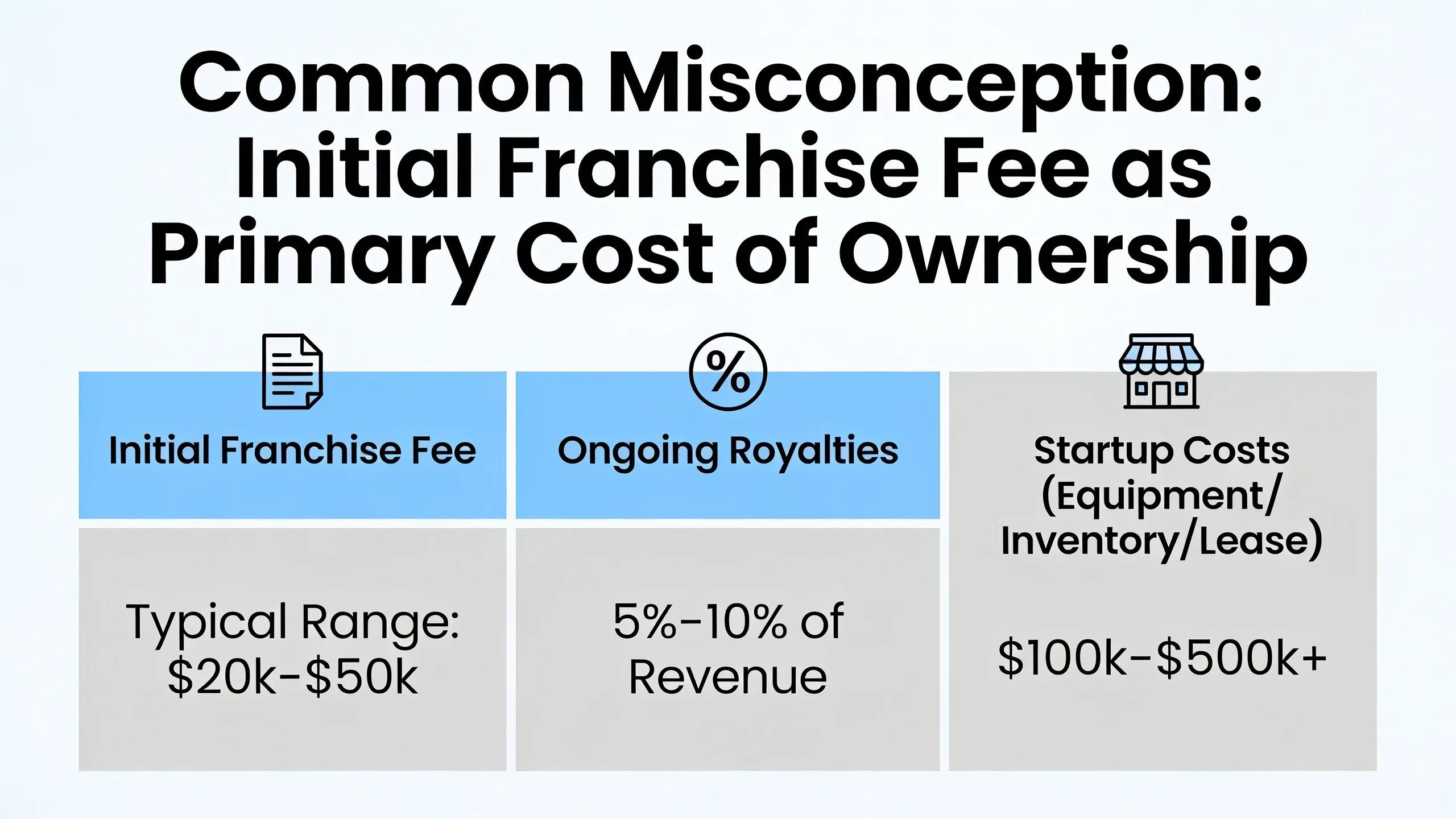
Viewing the initial franchise fee as the primary cost of ownership is a significant misconception. The full financial picture extends well beyond that entry figure. Professionals making the transition from a Corporate Career to Franchise Business ownership who underestimate total costs risk running short on working capital before their business gains traction.

Good Guys Franchise Consulting describes the initial franchise fee as a “cover charge.” Paying that fee grants entry. The right to use the brand’s intellectual property. The fee does not cover ongoing operational costs once the business is running. Franchisees who treat the entry fee as the finish line — rather than the starting line. Expose themselves to cash-flow shortfalls that derail otherwise promising businesses.

What Costs Exist Beyond the Initial Franchise Fee?

Ongoing operational expenses — staffing, inventory, royalties, marketing contributions, and lease obligations — accumulate from day one. The initial fee opens the door; sustained capital keeps the business moving forward through the critical early months.

What Funding Options Are Available to Prospective Franchisees?

Choosing the right lending program plays a significant role in both initial and ongoing franchise success. Good Guys Franchise Consulting connects prospective franchisees with multiple funding paths, including:

  • SBA loans through the Small Business Administration

  • Private lending from institutional lenders

  • Retirement plan funding — accessed without early withdrawal fees

  • Unsecured lines of credit for flexible capital deployment

SBA loans through the Small Business Administration

Private lending from institutional lenders

Retirement plan funding — accessed without early withdrawal fees

Unsecured lines of credit for flexible capital deployment

Each option carries different qualification requirements, repayment structures, and strategic implications. Selecting the wrong program at the outset creates financial drag that compounds over time. Good Guys Franchise Consulting guides prospective owners through these options. The funding structure supports long-term success, not just the initial transaction.

Why Does Professional Guidance Improve Your Franchise Outcome?

Professional guidance from Good Guys Franchise Consulting directly increases a candidate’s likelihood of franchise success. Navigating the shift from a Corporate Career to Franchise Business ownership without expert support raises the risk of costly mismatches, wasted time, and avoidable financial loss.

Our owner brings over 18 years of multi-unit franchise ownership experience to every client engagement. That firsthand perspective means we recognize the pitfalls candidates miss when searching alone. And we steer clients away from opportunities that look attractive on the surface but don’t align with their goals.

Does working with a franchise consultant cost the candidate anything?

Good Guys Franchise Consulting’s consultation service costs candidates nothing. Franchisors pay our consulting fee directly — the same way employers pay placement agencies for sourcing qualified candidates. Candidates never absorb that cost.

Does using a consultant add to franchise startup expenses?

Using a franchise consultant does not add to startup expenses. The franchisors and business opportunities we work with understand that when we introduce a qualified match, they absorb the consulting cost entirely. Your capital stays focused on launching the business, not on advisory fees.

Here is a quick comparison of the guided versus unguided search experience:

Factor

Without Guidance

With Good Guys

Vetting expertise

Self-directed

18+ years of ownership insight

Consultant cost to candidate

N/A

Always free

Franchisor fee responsibility

N/A

Paid by franchisor

Risk of poor-fit selection

Higher

Reduced through expert matching

Factor

Without Guidance

With Good Guys

Vetting expertise

Self-directed

18+ years of ownership insight

Consultant cost to candidate

N/A

Always free

Franchisor fee responsibility

N/A

Paid by franchisor

Risk of poor-fit selection

Higher

Reduced through expert matching

The result is a smarter, lower-risk path from corporate employment to franchise ownership — at no added cost to you.

The transition from corporate professional to franchise owner is less a leap into the unknown. Less a departure from everything you have built. It is a strategic pivot that puts your existing skills to work in a new arena. The structure, the proven systems. The built-in support network of franchising align naturally with the discipline and execution mindset you already carry. With the right guidance, that next chapter does not just make sense — it becomes inevitable.

FAQ

Do corporate professionals need industry-specific expertise to own a franchise?

No industry-specific expertise is required. Franchisees transition from corporate careers into ownership by applying existing leadership. Management skills directly to the business.

What does staying in a corporate career cost a professional long-term?

Years of high performance in a corporate role build equity for the employer, not the professional. Effort compounds someone else’s asset rather than creating personal, transferable wealth.

How does Good Guys Franchise Consulting support the transition?

Good Guys Franchise Consulting guides executives through matching, vetting. Legal steps at no cost to the buyer, connecting qualified candidates with hundreds of franchisors through a free IFPG-powered consultation.